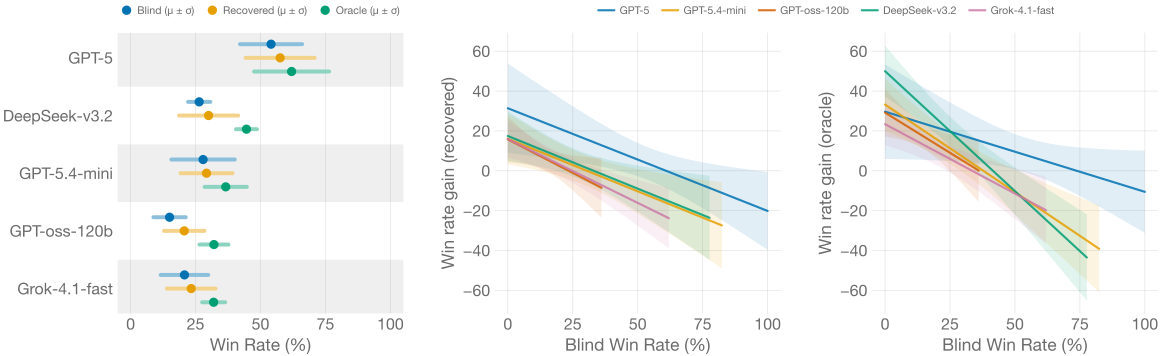
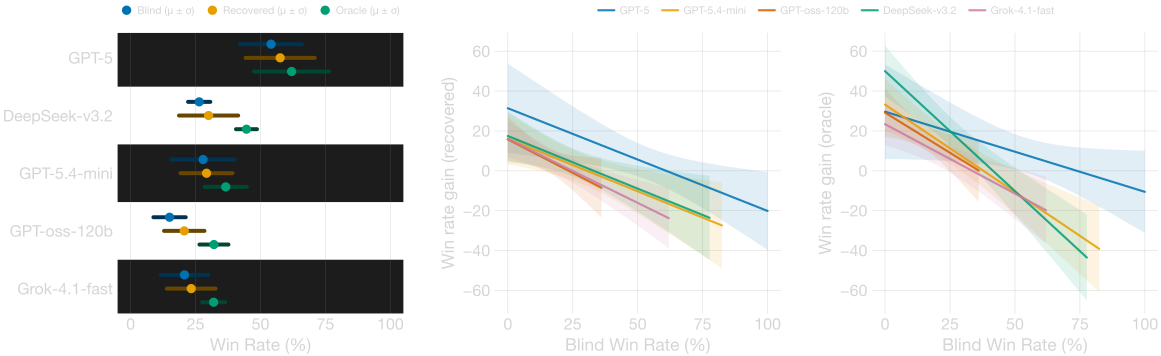
To test whether a recovered strategy is useful, we ask an LLM agent to write a policy that plays the original target. We give it three levels of intel about the target: just the game rules (blind), our pipeline's reconstruction (recovered), or the ground-truth code (oracle). We measure the win rate gain: the increase in win rate relative to the blind baseline. Across 5 models, 4 of the 5 arenas, and 720 tournaments:
- Recovered strategies help in designing counter-strategies: oracle > recovered > blind across all five models.
- Weaker models benefit more: there is a negative correlation between blind win rate and how much the recovered policy helps.
- Stronger models catch up: the recovered-policy advantage shrinks over rounds for strong models as their blind play improves.
 Data
Data